
South Korean President Declares Martial Law

Only lasting a matter of hours, the president of South Korea declares emergency martial law and is faced with intense backlash.
On Tuesday, December 3rd, at approximately 11:00 p.m. South Korean President Yoon Suk-yeol declared martial law in an unscheduled televised address. He accused the Democratic Party, which holds a parliamentary majority, of engaging in anti-state activities and sympathizing with North Korea. Yoon argued for South Korea’s need to “rebuild and protect the country from falling into ruin” claiming South Korea needed protection “from North Korean communists and anti-state elements.”
Other South Korean politicians were quick to declare the Union’s address as illegal and acting against South Korea’s Constitution. Leader of the opposing Democratic Party, Lee Jae Myung, compelled MPs to vote against the declaration.
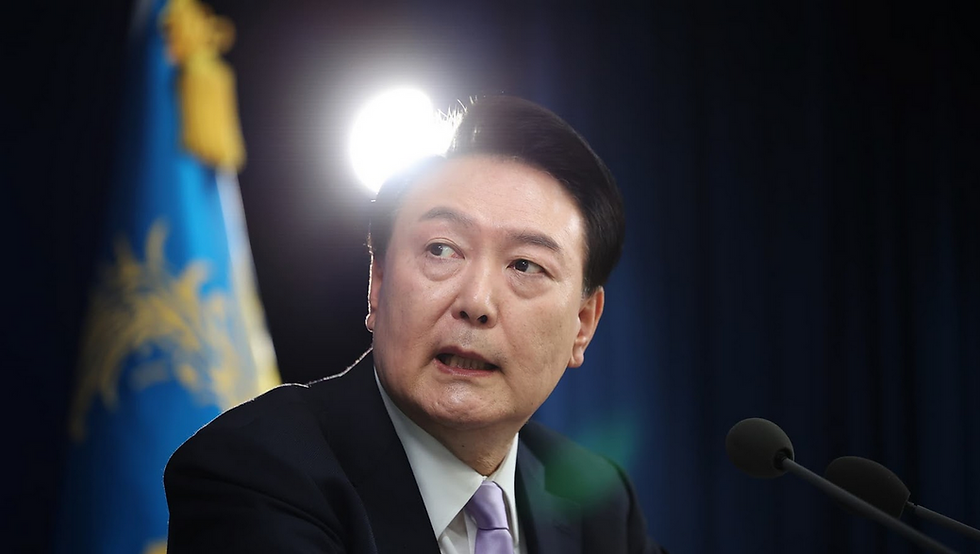
South Korean President Yoon Suk-yeol
Control was handed to the military where troops and police were deployed to the National Assembly Building in an attempt to stop parliamentarians from meddling with his plans. Yoon was unsuccessful and legislators were able to enter Parliament and vote to lift the emergency martial law which only lasted 2 hours.
Overnight, South Korea had endured its first attempted coup in over 40 years, Yoon having overseen the shortest lived period of martial law in all of the country’s history. Because Yoon declared martial law, he seized dictatorial power for the time being.
Thousands of protesters surged through the streets but remained non-violent.
Later at about 4:30 a.m. President Yoon declared he would reverse his decision additionally stating that he would withdraw the troops sent to carry out his order. However, he continued to justify his actions for the address using his original reasoning.
Under South Korea’s Constitution, the president is able to declare martial law when needed in light of a military threat or to maintain Public Safety. Because Yoon declared emergency martial law, he has the authority to limit freedom of speech and public assembly, according to the Center for strategies and International Studies.
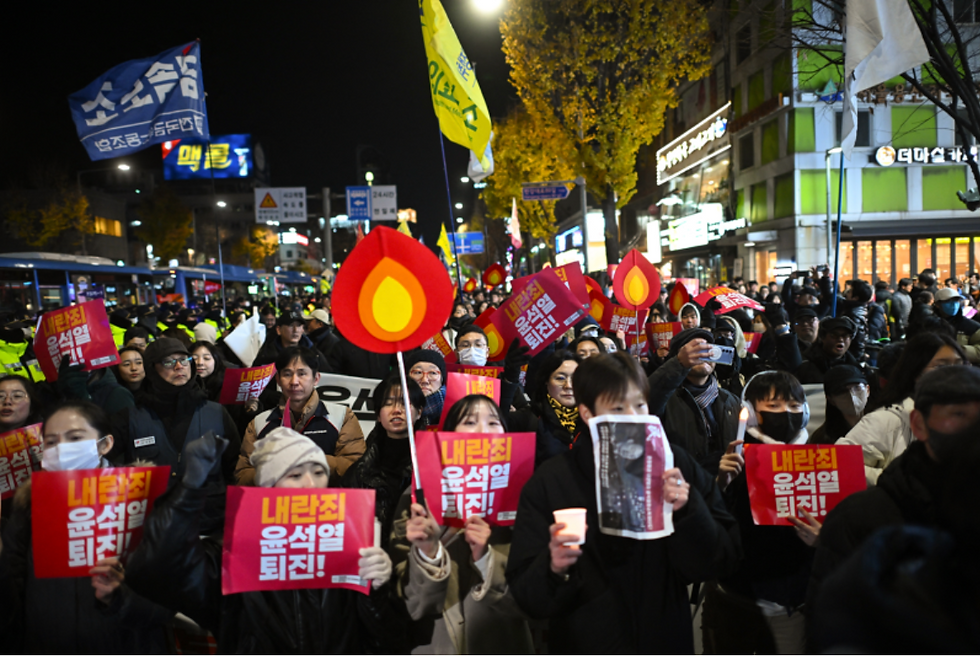
Demonstrators protest against martial law declaration
All social media outlets were placed under martial law control along with all medical personnel being instructed to resume work within 48 hours including striking doctors.
Many South Korean politicians have declared Yoon’s actions illegal and/or unconstitutional as under Article 77 of the Constitution, declarations of martial law must be only for the most serious situations (as in actual war).
Many speculate that this declaration of martial law is coming from months of declining public support. The Declaration focused on political opponents rather than clarifying any specific threat from North Korea.
The main parties in opposition to Yoon had already begun putting in the work to introduce an impeachment bill against him, in hopes of getting the bill passed by Saturday. Protesters, however, were more impatient, yelling for Yoon to step down as president immediately.
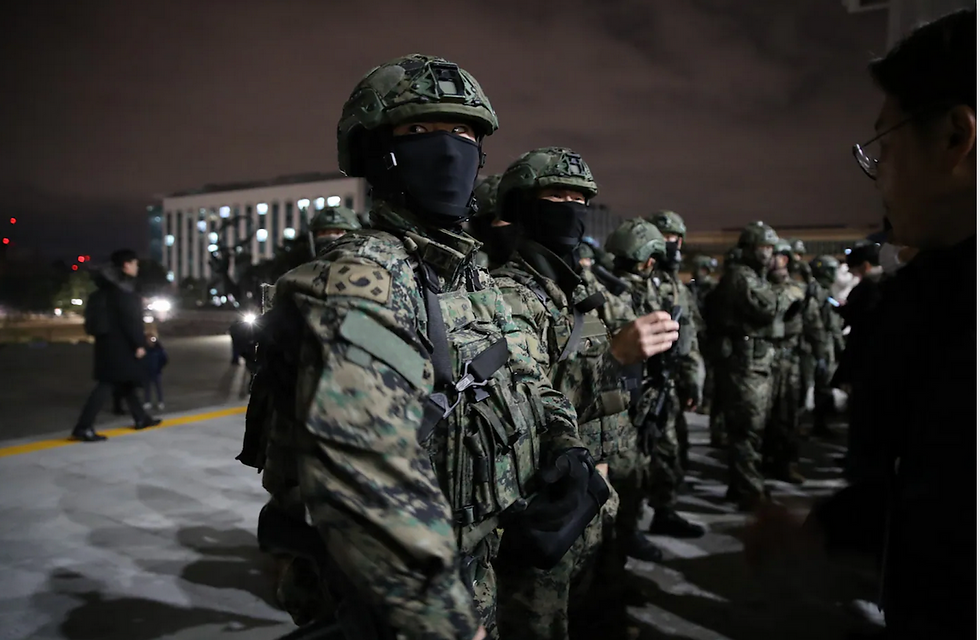
South Korean soldiers standing outside the National Assembly in Seoul
On Saturday, December 14th, President Yoon was officially impeached by the National Assembly, with a vote of 204 to 85. Because of his impeachment, Yoon will be suspended from office. In the meantime, South Korea’s Constitutional Court will deliberate what’s next, as Prime Minister Han Duck-soo takes power as interim president.
However, the possibility of impeaching Prime Minister Han is still on the table, due to his possible connection with the martial law declaration. In this case, the deputy prime minister for the economy would take the role of president.
If the Constitutional Court backs Yoon’s removal from office, he would become the second president in South Korea to be impeached successfully, the first being conservative president Park Geun-hye (who was impeached in 2016).
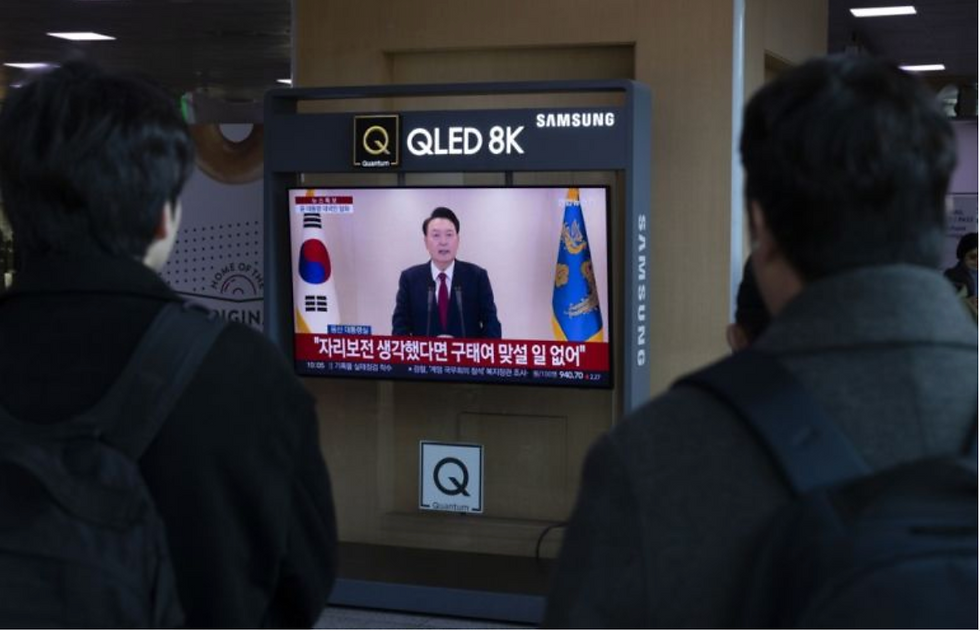
Yoon speaks unapologetically on his decision to declare martial law
It is estimated that 200,000 people protested in the streets of Seoul, just hours before the impeachment vote.
According to a Gallup Korea poll released on Friday, his approval rating has gone down to a mere 11 percent, having been 19 percent in November just before his martial law declaration. The Gallup Korea poll also revealed that 75 percent of people are in support of his impeachment.
“This is a significant moment. But I don’t think anyone is under any false pretense that the battle ahead is done,” says Al Jazeera’s correspondent Eunice Kim. “The uncertainty the South Koreans have had to live with in the past two weeks is still the same uncertainty that lies ahead.”


Comments