
The rise of boys' volleyball in the U.S.

Boys' volleyball has been unknown for decades in the U.S., but is now steadily gaining popularity.
Every volleyball player knows the feeling of flying through the air, watching the ball drop right into your hand, and slamming it down onto the other team’s court. That feeling is coming to more and more high school boys in the U.S. as the previously unknown thrill of the sport is starting to be recognized and appreciated by more people. For many decades, when anyone thought of volleyball, their thoughts immediately went to the girls’ sport. Lots of people didn't even know that the boys' version of the sport existed. But thanks to the efforts of many organizations such as First Point Volleyball Foundation, USA Volleyball, and the American Volleyball Coaches Association (AVCA), and the tireless efforts of coaches around the country, the word is getting out.
According to a survey published by the National Federation of High School Coaches (NFHS), over the past 6 years, high school boys' volleyball has grown by over 50 percent, gaining over 40,000 athletes in the last 20 years, with 10,000 of those being in the last year alone. This gives boys' volleyball the highest growth rate of any high school boys' sport in the last decade. These numbers are largely due to the launch of the First Point Volleyball Foundation, which is dedicated to nurturing and growing the sport.

Since First Point was founded in 2016 by UCLA head coach and USA Volleyball national team coach John Speraw and Wade Garard, the president of the USA Volleyball Foundation, it has already had a significant impact on several Division I volleyball programs. Some of its greatest achievements include providing funding to start programs at Maryland Eastern Shore and Northern Kentucky, as well as bringing back a previously successful D1 team at the University of the Pacific. According to Sarah Conklin, one of the co-chairs of First Point, the organization has also played a direct role in creating, reinstating, or sustaining more than 40 other NCAA men’s volleyball programs.
Recently, First Point and USA Volleyball have announced their collaboration, which, according to Conklin, will give the organization “broader reach, credibility with state associations and schools, and stronger pathways from youth to collegiate to international volleyball.” This will also provide the foundation with extra funding and more media coverage, keeping all efforts to grow the sport coordinated, widespread, sustainable, and effective.
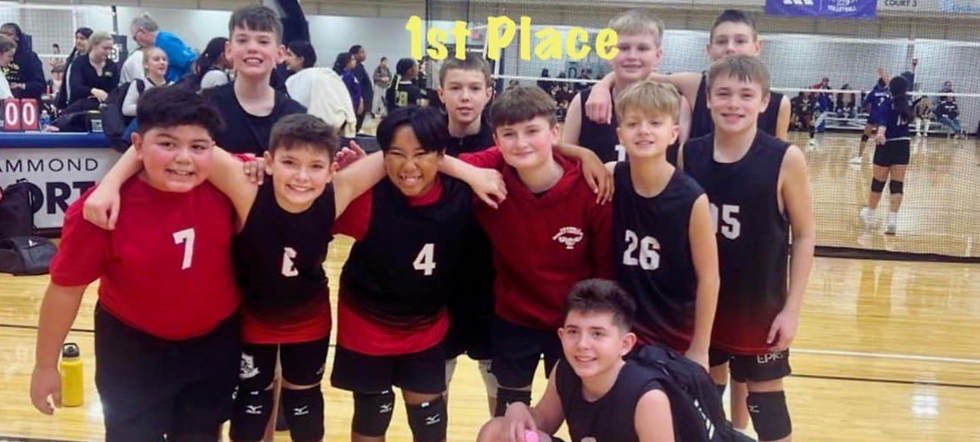
Boys are also beginning to start playing at younger ages. In the past, the majority of boys’ volleyball players started in high school, when they tried it out and really liked it, but now more and more boys are starting at younger ages. This not only raises the level of play at the higher levels because the players have been practicing for much longer and have had more time to develop their skills, but also strengthens the community around volleyball at all ages.
Recently, the NCAA has made a change to the rules surrounding scholarships for players, allowing Division 1 colleges to provide an unlimited number of scholarships to their players, while also limiting each team’s roster to only 18 players. Previously, many teams had player counts in the 20s, or sometimes even higher, so this new maximum greatly limits the number of players eligible, almost eliminating the possibility of mid-season walk-ons.
I wanted to see why other people like to play volleyball, so I asked some people who are planning to join the New Roads team. I asked two 9th grade students how they got into the sport, and both of them said that they had been introduced to it by their friends. They started playing more, one at 13 years old and one at 15, and got interested in playing for a club. Now they are invested in volleyball and love playing it. This happens a lot, where someone is introduced to the sport, they really like it, but when they didn’t know much about it they didn’t think they would. This is the power of publicizing volleyball, and its impacts are already being seen.


Comments