
The Case for Condom Availability in California High Schools

Addressing the need for condoms in high school.
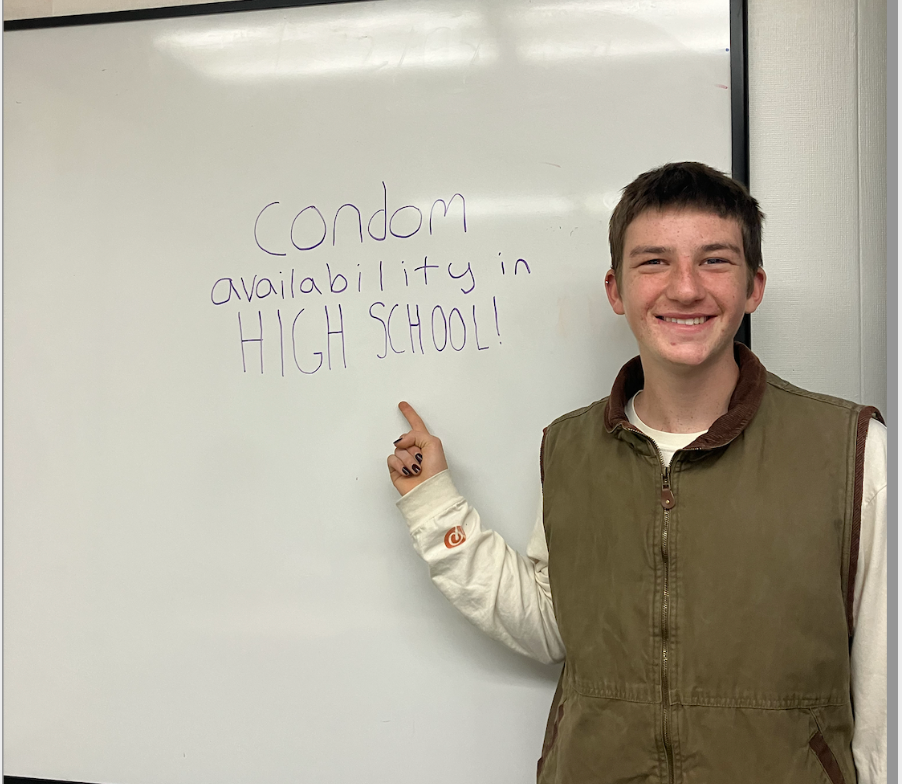
As youth STI rates rise, making condoms accessible in high schools is a vital step toward safeguarding students' health. According to Stanford Medicine, “STIs affect men and women of all backgrounds and economic levels. But nearly 50 out of 100 STI cases in the U.S. happen in people younger than age 25.” A better sexual health education system is urgently needed to address this public health crisis.
“Behaviorally, due to a still-developing prefrontal cortex” —the part of your brain responsible for decision making— “teenagers are more susceptible to having unprotected sex,” according to the National Institute of Health.
“From a biological perspective, adolescent females are particularly susceptible to STIs like CT [chlamydia] and HPV due to lower production of cervical mucus and increased cervical ectopy. Therefore, if exposed to an STI, adolescent females are more likely than adults to get infected.” Not only do we see discrepancies in sexual health between female and male adolescents, but due to unequal access and systemic barriers, LGBTQIA+ youth are disproportionately impacted by STIs. They also face the most challenges in obtaining correct sexual information due to a variety of factors, including stigma.
A lack of representation in public sexual health statistics, as well as homophobia, transphobia, and an almost complete lack of LGBTQIA+ sexual education, are several of the reasons why LGBTQIA+ people are so disproportionately impacted by STIs. The CDC explains, “Sexually active gay, bisexual, and men who have sex with men are at greater risk for getting an STI.”
“I am very supportive of increasing access to contraceptives because of the high rates of STIs; it's clear that they are needed,” says New Roads biology teacher Jarred Phillips. “There's no evidence that access to contraceptives encourages more sexual activity, but there's lots of evidence that they help lower STI rates. If they worry their parents will see them with a condom, they probably won’t get one. I am all for promoting access without stigma.”
The Youth Health Equity and Safety Act is a bill that helps provide condoms for public and charter high-school students, ban high schools from prohibiting condom distribution, and prohibit pharmacies from asking youth for age or ID when buying condoms. Although the act reached the California Senate in February, Governor Newsom vetoed the bill in October due to budget concerns. His choice was controversial, as the bill would counter federal spending on sexually transmitted infections, which they spend $1 billion on already. Not accepting defeat, the YHES team worked hard to revise the bill and raised $5 million to address the budget issues. Despite their efforts, the bill was vetoed again in 2024 due to yet another fiscal concern.

Governor Gavin Newsom
Senator Caroline Menjivar, the bill’s author, remains optimistic. “Both of my YHES bills have been led by a highly informed and persistent group of youth, which gives me hope for a more just and equitable future,” she said.

Woman restocks condom dispenser at San Diego State University
Ella Dorfman, lead ambassador for the YHES campaign, says, “We cannot blame the vetoing of SB 541 and 954 [the two YHES bills] on purely fiscal concerns. Stigma and societal judgment are deeply intertwined with contraception. To make a true impact, we must not only acknowledge fiscal concerns but also acknowledge how societal perception shapes policy regarding sexual health.”
Many students and youth face significant challenges purchasing condoms in pharmacies due to certain age restrictions, financial difficulties, and worry of parental disapproval. Many worry that providing condoms in high schools might encourage sexual activity. The YHES bill does not currently have an option for parents to opt out. However, according to the CDC, “CDC researchers systematically reviewed scientific papers that evaluated school-based CAPs [condom-availability programs] in the U.S. and found that no programs reported any increase in sexual activity, number of sex partners, frequency of sex, or other sexual risk behaviors.”
In cities with high-school CAPs, the rates of STIs like gonorrhea and chlamydia decreased by 47% while cities without CAPs increased by 23%.
Freshman Zoya Ahmad believes providing condoms in schools would create “a comfortable, stigma-free environment that values students’ health over unrealistic expectations.”
“Healthy sex is better than no sex,” agrees Sophomore Kiana Miller. “We should be promoting safety.”
With STI rates among youth climbing each year, systemic barriers, stigma, and a lack of resources leave many students vulnerable. For students in Los Angeles County, free condoms are available through Teensource.org and by calling the STD/HIV Hotline at 800-758-0880.
To protect students across California, schools must equip them with both knowledge and resources, starting with condom accessibility. At New Roads, there is a box of condoms in counseling. Ensuring students can make informed and safe decisions is an investment in their well-being and that of future generations.


Comments