
Up North is Going South
- Ronit Chhibber '23
- Feb 22, 2022
- 5 min read
Canada’s problems need to be called out.
Canada: the crisp snow falling from the heavens, skiing galore, and the nice people who say “soory” instead of sorry. Sounds like a perfect country from the outside, doesn’t it? At least, that’s what they want you to think. By no means is the land up north a bad country, but Canada is not close to the ideal place many think it to be.
In 1969, former prime minister, Pierre Trudeau, famously described bordering the United States as “sleeping with an elephant.” When I lived there, I noticed how Canadians either thought they were better than Americans and that the US did not affect them or, like Trudeau, believed as if America was influencing every little bit of their lives. Patriotism is fine, yet at times Canada and the U.S.’s relationship consists of the former using the latter to hide their own realities.
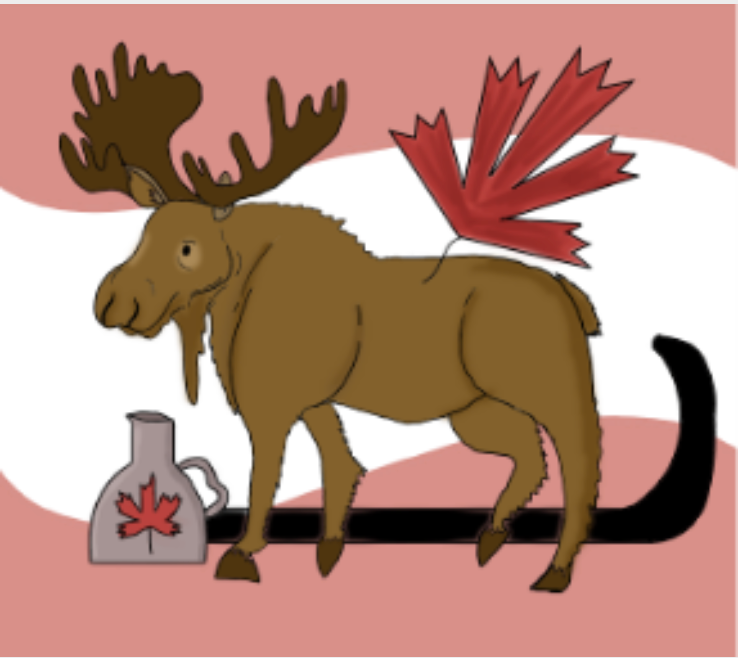
By no means is the land up north a bad country, but Canada is not close to the ideal place many think it to be.
Canadians’ use of the American fog to blur their vision extends past the common conversation. From politics to education, the comparisons to America have no end. When confronted about Canadian issues, politicians are extremely quick to utilize U.S. statistics instead. When asked about police brutality in Canada last year during the BLM protests, Peter Julian, the head of Canada’s center-left New Democratic Party, quickly pointed to America and stated that Canada had far fewer police killings during the same year. A fact that, while true, is extremely misleading. Canada’s numbers are far less than those in the U.S., but when it comes to several other statistical areas of gun-related issues in comparison to several other similar countries, the difference is not so clear. For example, when it comes to guns owned per 100 inhabitants, Canada is fourth worldwide.
Janine Extavour, Upper School Academic Dean at New Roads School and a Canadian who completed a K-12 education there, says that “the US doesn’t have to talk about Canada, but Canada has to talk about the USA,” which also might explain Americas’ large presence in Canadian media. Canadian politicians go to extreme lengths to compare Canada to America, but tend to focus on the U.S.’s shortcomings, such as its level of gun-violence and a lack of free healthcare. In an almost self-congratulatory way, the comparisons allow Canadian politicians to praise themselves for no reason, and doing so stands in the way of the country addressing its own social issues.
Talking to Raunak Chawla, a good friend of mine who still lives in Canada, he remembers teachers glossing over the entire premise of Canadian slavery and immediately jumping into topics such as American slavery before really learning about Canadian history. In his history classes, he remembers being stunned when learning about how terrible the US was, even though Canada had similar histories of segregation and slavery. “Yeah, I mean, they made it seem like the US was a terrible place filled with violence and racism,” Chawla said. Even in Canadian history classes, Chawla was taught to believe in Canada’s superiority and that “at least they weren’t as bad as the US.” Chawla explains that, while he learned more about US history, he was simultaneously being taught that Canadians are better than Americans.
Like Chawla, Extavour says that Canadian history classes only took up a small part of the K-12 curriculum. Four months in 7th grade, four months in 8th grade, and a class of Canadian history in 10th. “Both avoid talking about treatment of Indigenous people, they [schools in the U.S.] find it hard to talk about Japanese internment, Chinese labor workers, and all,” Extavour said, describing the sad realities of how both Canada and the US hide their own problems in the classroom. Extavour also said that there is “ more history [taught] in the US schools than there is in Canada.” And from my own experiences in both Canadian and American school systems, I can attest that the US cares slightly more about teaching their own history than their Northern neighbor.
In Canada, until 1833, when slavery was abolished in British-Canadian colonies, the richest families and religious orders frequently owned slaves. They consisted of a mix of Indigenous and African people exported from the American slave trade, who were taken from their homes and entered into forced servitude — with indigenous peoples being stripped of their culture, and suffering under white ownership before being expected to assimilate through a variety of measures, including residential schooling.
Yet it’s not just their history that Canada tries to sweep under the rug. Today, Indigenous people account for only 4.5% of the population, yet they make up a staggering 25.2% of the prison population — a fact I learned from doing my own research, not the Canadian education system. On top of that, Canada’s labor market is racialized with people of color not only being paid less, but commonly being expected to put themselves in danger and take on unsafe jobs in the workplace.
The outside public often has a different idea of Canadians, the common misconception that Canada is a land where everyone is a liberal, free-loving character. The idea of Canada only being home to suburban-esque families and nothing more than that. What’s clear in any case, is that U.S. policies have influenced how Canadians think.
A recent example comes in the form of trucker protests taking place all across the country in response to new vaccine mandates from the Canadian government. These outraged groups consist of over 30,000 maskless truckers holding “Don’t Tread on Me” and confederate flags who have blocked borders across the country. In sadly tragic (yet obvious) fashion, about 70% of those taking part are unvaccinated— not surprising since there isn’t social distancing almost anywhere apart from very organized events in Canada. The Truckers’ protests are an even bigger deal than they already seem; because they’re not just average citizens, they’re truck drivers who are the backbone of the supply chain. The truckers’ protests prove that there is something that cannot be explained with statistics: Canada has an urban world divide, just like America, and Canadian individualism isn’t exactly what it’s thought to be.
“It goes without saying that Canada does have problems, every country does,” Extavour said, and I couldn’t have worded it better. Canada is a nice place but by no means is it a perfect winter wonderland. Only by acknowledging its issues can it truly start to become the country it advertises itself to be.


Comments