
Where Would You Even Go?: How LA Teens Are Redefining the Age-Old Third Space

For previous generations, it was the mall. For LA teens, it's the beach, a friend's basement or the Wednesday night youth group snack table.
"My third space is not in America," says Charlotte Menadue ‘27. Hers is in Australia, coffee shops where different schools mixed, where you'd talk to people you'd never normally meet. That place doesn't exist for her here.
The term “third place” has been coined to describe a place that isn’t simply work or home; it’s a place of connection, and they have been dying.
Nothing beats the feeling of walking into a cafe, the barista knowing your name and favorite drink, the regulars: the college kids grinding their homework or the elderly lady reading her book, all there. It’s familiar, it’s routine, you are known there and have asserted your presence in that magical third space.
“It's a go-to, when the first two spaces aren't functioning; you can go to that third place,” says Christine Park ‘27.
“You can connect with people, meet new people, and have fun,” says Asamino Spong ‘26.
But what was once so foundational to previous generations has quietly become forgotten.
“I feel like I don't have a third space. Somewhere my friends and I hang out a lot is Evie Millstein’s house. But I don't see that as my third space,” says Abby Jonathan ‘27.
When I think of third spaces, what first comes to mind is ‘80s malls. Especially after watching Stranger Things, I couldn’t help but yearn for the vibrant mall culture of the time: shopping at Sears with your friends after school, packed blockbuster movie nights on the weekend, demolishing a warm Wetzels Pretzels, and chugging a jumbo Coke. Malls had a grip on Americans and were the true epitome of American consumerism, but also the main hub of social life.
In West LA, there are surprisingly fewer malls than you would think. There's the two big ones: Century City Mall, where you can find middle schoolers skipping class — “Oh, like an 8th grade Century City type vibe?" as Mimi Nikolic ‘26 puts it, laughing at the nostalgic West LA kid canon event— and The Grove, where all the LA influencers snap pictures of their La La Land matchas. The Promenade is pretty dead, as many of the most popular stores like Nordstrom have closed.
Nowadays, high schoolers are busier than ever before.
Santi Jimenez ‘27 juggles being on the school baseball team and taking all honors classes.
"As we get older, our responsibilities are going to change. It's not as much as, you know, having fun, like it used to be, where you could be little,” says Jimenez.
The whole reason teens of previous generations had time to loiter at their third space wasn't just ease, it was free time.
“I have more homework to do, and those hangouts that I could go to on the weekends are now filled with studying for a history essay or playing a baseball game. People are getting busier as they get older, which takes away from that third space,” says junior Sawyer Hollis.
Jimenez feels the time crunch of junior year too. “I'm so busy all the time that my only complete day off is on Saturday. I work every day for that Saturday” he says.
According to the Institute for Family Studies, “in the 1980s, 88% of high school seniors reported visiting friends at least weekly. Just 69% of teens today report the same. What are modern American teens doing instead? Spending more time alone. Whereas 43% of high school seniors from the 1980s reported spending an hour of leisure time alone daily or near-daily, three in four teens today report the same.”

The social landscape for teenagers has changed drastically, shifting to online interfaces and nightly FaceTime calls. So where are Gen Z teens actually spending their limited free time?
“I definitely fall victim to staying at home and going on my device,” says Spong.
Park describes her third space as playing Roblox or making TikToks with friends. “Home! Online mostly.”
“Kids playing outside in front yards, you don't see that anymore,” says Spong.
At home, everything is at your fingertips: FaceTime instead of making the effort to hang out, online shopping instead of the mall, Waymos instead of Ubers, DoorDash instead of takeout. The death of third spaces is more indicative of our social systems shifting from human to automated interfaces. Although fewer menial interactions at the grocery store don't seem like the end of the world, they represent a lonelier society increasingly stripped of human connection.
The options outside of home aren't much more inspiring either. “Where would you go? A third space? Like, the gym?” said Jonathan. "You can have everything at home— why go anywhere else?” adds Menadue.
Neither of them can seem to picture it. That might be the whole problem.
LA makes finding a traditional third space especially difficult. “It's easy to get lost in LA. It's very busy and everything's spread out from each other,” says Lucas Noe '27.
Unlike New York City's dense urban environment, where ten neighborhoods might fit in the span of Palisades to Brentwood, LA is dispersed, and its public transit isn't exactly the Tokyo bullet train. A friend in West Hollywood feels far when you live in Santa Monica.
“I feel like traffic and the fact that people live farther away from each other— there's not a good communal space,” says Mimi Nikolic '26.
“Sometimes I imagine living in a small town where it's more quiet and more simple. It can be easier to have a third space,” says Noe.
Sawyer Hollis, who moved from small-town Dripping Springs, Texas to LA, lost his third space in the transition, the strip mall where he and his friends would wander after school. “You'd always see someone while you're at Beltera's,” he says. In LA, that casual overlap is harder to casually have. “There's so many things to do— events and parties— it's a lot. I do think it is harder to have a third space besides a friend's house because of that.”
Still, third spaces aren't dead. They've just gotten smaller and more personal.
"For me, it's get-togethers at Donovan's house. All my best friends are there, and we have a good time. We eat food, we watch random stuff," says Hollis.
"I spend a lot of time driving around with my friends," says Evie Millstein ‘27.
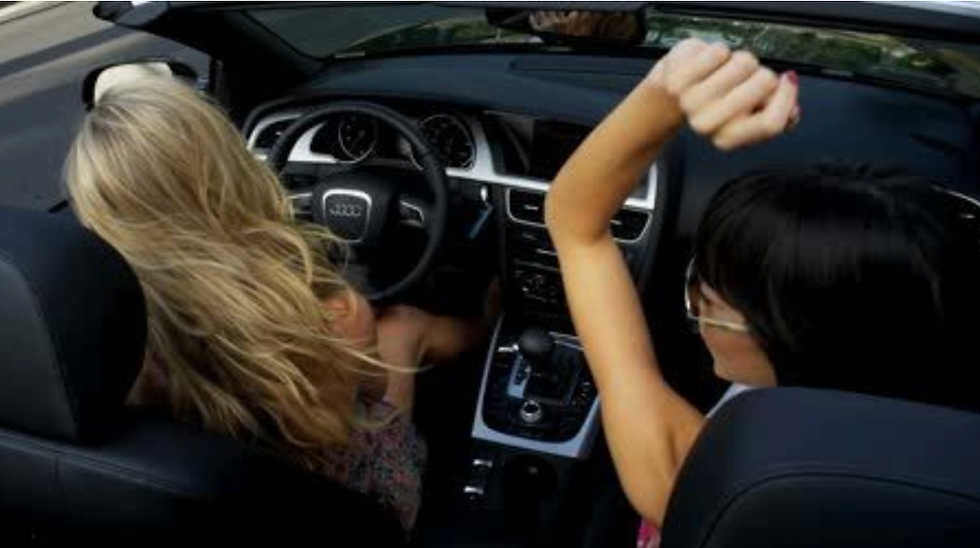
It's these more intimate moments that still foster the deep connection third spaces were always meant to provide, without the local mall as the forefront.
“Parties and friends' houses mostly,” says Park, who describes how getting ready with her friends before a party is more fun than the party itself.
There is one public, traditional third space that still holds: the beach.
“As a 16-year-old, my third space has to be the beach. I live right by it, and it's where I can breathe fresh air. There's just so much space, I can move around as I please, play sports, talk freely without people caring,” says Noe.
"Since I live so close to the beach and a lot of my friends do, it's definitely a place where we all go to hang out and boogie board, surf, or just chill in the sand," says Spong.

“Since I live so close to the beach and a lot of my friends do, it's definitely a place where we all go to hang out and boogie board, surf, or just chill in the sand,” said Spong.
For some teens, church fills the role. It's one of the few places that's free, consistent, and community-oriented. “I get free food and get to see my friends at Wednesday night youth group!” says Ruru Chonzi '26.
Abby Jonathan '27 meant it as a joke. "Where would you go? A third space? Like, the gym?" she said. But it turns out she wasn't far off.
Daniel Salem ‘26 loves the gym. He considers it his second home. “The gym is my third space, it’s my me time”. He’s not alone: the LA Fitness on Bundy and Missouri is consistently packed with teens. The space is transactional and communal at once— a place where you work on yourself surrounded by others doing the same, a shared goal that quietly builds community.
Although third spaces look different today than before, they still serve the same purpose: breaking free from the monotonous cycle of work and home to a place where you can just exist.
“It's like core memories, we're gonna tell our future generations and kids,” said Park.
“I don't really see my parents having that third space other than home and work and their responsibilities, which is us as their kids,” said Jimenez.
We won't notice what we lost until we're the parents.


Comments